



Can You Export Used Cars from China? 2025 Importer Guide
Can You Export Used Cars from China? A Comprehensive Guide for Global Importers
For decades, Japan and South Korea have dominated the Asian automotive export sector. However, a seismic shift has occurred in the global automotive supply chain over the last few years. As global demand for affordable vehicles and New Energy Vehicles (NEVs) rises, international dealerships and fleet managers are asking a crucial question: can you export used cars from china?
The answer is a definitive yes. Since the landmark regulatory changes initiated by China’s Ministry of Commerce in 2019, the doors have officially opened. China is no longer just the world’s largest car manufacturer and consumer market; it is rapidly becoming a titan in the used car export industry. Whether you are looking for cost-effective sedans, heavy-duty commercial trucks, or cutting-edge electric vehicles, sourcing from China is now a viable and highly profitable strategy.
This guide will explore the mechanics of this booming trade, the regulatory landscape, and the strategic advantages of adding Chinese inventory to your supply chain. We will answer the question “can you export used cars from china” with actionable insights, step-by-step processes, and a look at the future of this massive market.
The Regulatory Shift: How China Opened Its Doors
To understand the current opportunity, we must look at the history. Prior to May 2019, exporting used vehicles from China was virtually impossible due to strict regulations aimed at keeping vehicles within the domestic economy. However, facing a saturating domestic market and a desire to stimulate new car sales, the Chinese government launched a pilot program to authorize the export of used vehicles.
Initially, this program was limited to 10 cities, including Beijing, Shanghai, and Tianjin. Today, that program has expanded significantly to cover vast regions of the country. This policy shift was the direct answer to “can you export used cars from china.” The government not only allowed it but actively encouraged it by streamlining the deregistration process and offering tax rebates on VAT for exported used vehicles. This has created a gold rush environment for B2B buyers worldwide who are eager to tap into China’s massive inventory of well-maintained vehicles.
Why Source Used Cars from China?
If you are already sourcing from Japan or the US, why switch or diversify to China? The benefits go beyond just availability. The unique characteristics of the Chinese market offer specific advantages that other export hubs cannot match.
1. The Rise of New Energy Vehicles (NEVs)
China is the undisputed global leader in electric vehicle adoption and manufacturing. Consequently, the secondary market for EVs in China is richer and more diverse than anywhere else on Earth. If your customers are asking for affordable electric SUVs, buses, or compact city cars, the answer to “can you export used cars from china” in the EV sector is a resounding yes. You can access high-quality used Teslas, BYDs, NIOs, and Xpengs at a fraction of the cost of new models, often with relatively low mileage.
2. Competitive Pricing Structure
The sheer volume of cars in China creates a buyer’s market. With millions of vehicles entering the secondary market annually, prices are highly competitive. For importers in Africa, Central Asia, and the Middle East, Chinese used cars offer a superior price-to-quality ratio compared to aging stock from Europe or higher-priced units from Japan.
3. Rapid Inventory Turnover
Chinese consumers tend to change cars frequently—often every 3 to 5 years. This means the “used” inventory available for export is often newer, with modern features, better safety standards, and lower mileage compared to the 10-15-year-old vehicles often exported from other regions.
The Step-by-Step Export Process
While the answer to “can you export used cars from china” is yes, the process is complex and requires strict adherence to customs procedures. Unlike buying a car domestically, exporting involves deregistration, inspection, and logistics handling. Here is the standard workflow for a B2B transaction.
Step 1: Sourcing and Selection
Importers typically work with authorized Chinese export enterprises. These entities have the necessary licenses to handle the paperwork. You cannot simply buy a car from a private owner in Beijing and ship it. You must go through a licensed exporter who can aggregate inventory.
Step 2: Vehicle Inspection and Payment
Once vehicles are selected, a third-party inspection is crucial. While the cars are generally newer, ensuring the battery health of EVs or the engine condition of ICE (Internal Combustion Engine) vehicles is mandatory. Payment terms are usually settled via TT (Telegraphic Transfer) before the export process begins.
Step 3: Deregistration and Transfer
This is the most critical regulatory step. The vehicle must be legally deregistered from China’s Department of Motor Vehicles (DMV) equivalent. The title is transferred to the export company, changing the vehicle’s status to “export pending.” This confirms legally that can you export used cars from china without holding domestic liabilities.
Step 4: Export License Application
With the deregistration complete, the authorized exporter applies for an export license from the Ministry of Commerce. This license is specific to the VINs (Vehicle Identification Numbers) of the cars being shipped. This “one car, one license” policy ensures strict tracking.
Step 5: Customs Clearance and Shipping
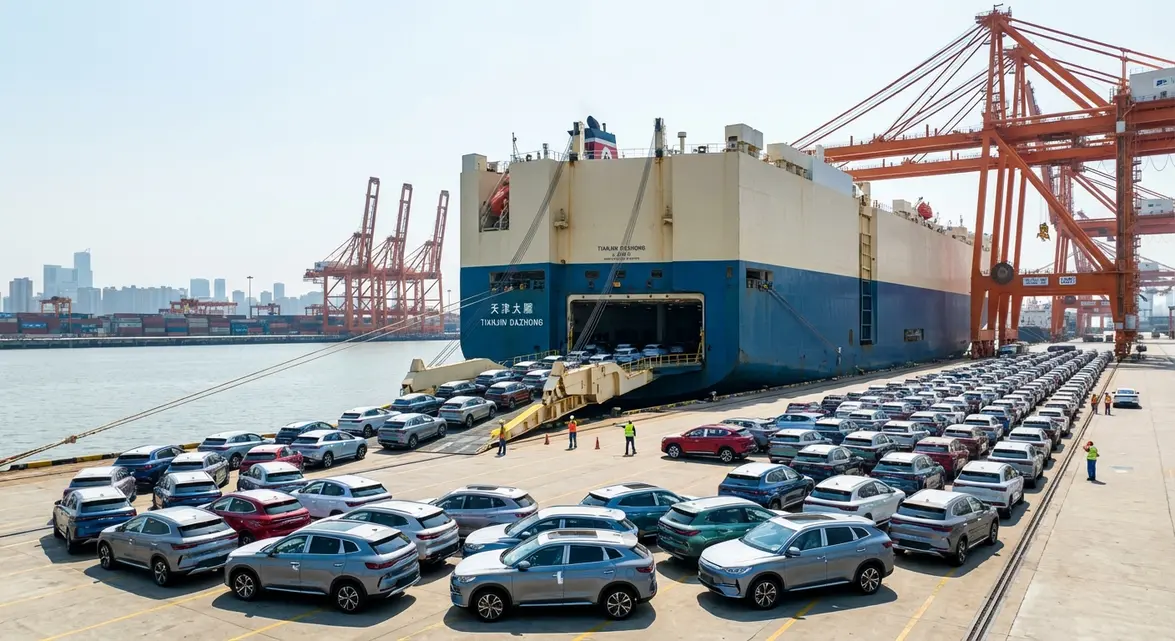
The final step involves Chinese customs clearance. Once cleared, vehicles are loaded onto Ro-Ro (Roll-on/Roll-off) vessels or into containers. Ro-Ro is preferred for large volume orders, while containers are often used for high-value luxury vehicles or smaller batches.
Key Markets and Demand
Where are these cars going? The global appetite is huge. Understanding where the demand lies helps verify that can you export used cars from china effectively to your specific region.
- Central Asia (Kazakhstan, Kyrgyzstan, Uzbekistan): Due to geographical proximity and the Belt and Road Initiative, this region is a massive importer of Chinese vehicles, particularly SUVs and commercial trucks.
- Russia: Following geopolitical shifts and the exit of Western brands, Russia has become a primary destination for Chinese automobiles, both new and used.
- Africa (Nigeria, Ghana, Ethiopia): Price sensitivity makes African nations ideal markets for budget-friendly Chinese sedans and robust commercial vehicles.
- The Middle East (UAE, Jordan): A growing hub for re-exporting and for high-end Chinese EVs.
- Southeast Asia (Laos, Cambodia, Myanmar): These markets often accept Left-Hand Drive (LHD) vehicles, making trade seamless.
Left-Hand Drive (LHD) vs. Right-Hand Drive (RHD)
One major consideration when asking “can you export used cars from china” is the steering wheel position. China is strictly a Left-Hand Drive (LHD) country. This makes exports to LHD countries (like Russia, most of Europe, West Africa, and the Americas) straightforward.
However, for RHD markets like Kenya, South Africa, or Australia, this presents a challenge. While some countries allow the import of LHD vehicles under specific permits, or for conversion, it is generally easier to export Chinese cars to LHD nations. If you are in an RHD market, you must verify your local import laws regarding LHD vehicles before purchasing.
Commercial and Heavy-Duty Vehicles
The conversation often focuses on passenger cars, but we must not overlook commercial assets. Can you export used cars from china that are built for industrial work? Absolutely. China exports a massive volume of used dump trucks, tractor heads (Sinotruk, FAW, Shacman), and concrete mixers.
These vehicles are built for rugged terrain and heavy loads. Because infrastructure projects in China move fast, equipment is often retired while still having years of operational life left. For developing nations building their own infrastructure, sourcing used Chinese heavy trucks is a cost-saving masterstroke.
Navigating Quality Assurance and Fraud Risks
As with any international trade, there are risks. When you verify can you export used cars from china, you must also verify who you are dealing with. The market has seen a proliferation of “agents” who may not have direct access to export licenses.
Verify the License
Only companies designated as “Pilot Enterprises for Used Car Export” have the direct authority to export. Ensure your supplier provides proof of this designation. Working with intermediaries can inflate costs and complicate the deregistration process.
Standardized Testing
China is implementing standardized testing for export vehicles, particularly for NEV battery health. Always demand a detailed inspection report. For EVs, the “State of Health” (SOH) of the battery is the single most important metric. A car might look brand new but have a degraded battery; a professional inspection will reveal this.
The Future of Chinese Auto Exports
The trajectory is clear. China aims to rival Japan as the world’s premier source of used vehicles. With the domestic government pushing for a “circular economy” and the continued overproduction of new cars necessitating an outlet for older models, the infrastructure for exports will only improve.
Logistics routes are becoming faster. The railway link from China to Europe and Central Asia offers a rail-freight alternative to sea shipping, drastically reducing transit times for landlocked destinations. Furthermore, as Chinese car brands (like Chery, Geely, and Haval) gain global recognition, the residual value of these used cars in international markets is climbing. The skepticism that once existed regarding Chinese build quality has largely evaporated, replaced by respect for their technology and value.
Conclusion
So, can you export used cars from china? Yes, and doing so represents one of the most significant opportunities in the automotive B2B sector for the coming decade. The combination of high inventory levels, government support, and dominance in the electric vehicle sector makes China a powerhouse sourcing destination.
For importers, the key is to partner with reputable, licensed export enterprises and to understand the specific logistics of your target market. Whether you are looking to flood a developing market with affordable transportation or introduce high-tech affordable EVs to tech-savvy consumers, the Chinese used car market is open for business. Now is the time to establish those supply lines, before your competitors do.
Frequently Asked Questions
1. Do I need a special license to import used cars from China?
While you, as the buyer, generally do not need a Chinese export license (that is the responsibility of the Chinese supplier), you absolutely need to comply with the import regulations of your destination country. You must check if your country allows the import of used vehicles, if there are age restrictions (e.g., cars older than 5 years banned), and if your local customs require specific import licenses. The question “can you export used cars from china” is often less about China’s rules and more about your local import restrictions.
2. Can you export used cars from china that are Right-Hand Drive (RHD)?
Generally, no. China is a Left-Hand Drive (LHD) country, so the vast majority of used inventory is LHD. While there are very small numbers of special-use RHD vehicles or re-exports, the scalable opportunity is strictly in LHD vehicles. If your country requires RHD (like the UK, Australia, or Japan), sourcing from China will require costly steering conversions or may not be legally compliant.
3. How long does the export process take?
The timeline varies based on logistics and paperwork. Once you have selected the vehicles, the deregistration and license application in China typically takes 5 to 10 working days. Shipping times depend on the destination; shipping to Southeast Asia might take 1-2 weeks, while shipping to Africa or South America could take 30-45 days. When planning, ask your supplier “can you export used cars from china within my required timeframe?” to manage expectations.
4. Are there taxes refunded when exporting used cars?
Yes, this is a major benefit. To encourage exports, the Chinese government offers VAT rebates on used car exports. This effectively lowers the purchase price for international buyers. When negotiating, ensure that the price reflects these rebates. The financial incentives are a primary reason why the answer to “can you export used cars from china” has become so positive for foreign buyers.
🚗 Looking to Import Cars from China?
Qicheng Car specializes in exporting Chinese used cars and new energy vehicles to Africa and the Middle East. We support wholesale orders, vehicle inspection, and international shipping.
- 🔹 Wholesale Inquiry:
Request Export Pricing
- 🔹 Available Vehicles:
View Used & Electric Cars
- 🔹 Why Choose Us:
Learn About Our Export Experience